


Smart Dental Implant Drills: The Trend Toward Real‑Time Bone Density Sensing and Adaptive Speed Control
Why Real‑Time Bone Density Sensing Matters
Bone density can vary significantly within a single implant site. The crestal cortex is often dense, while the underlying trabecular bone may be markedly softer. Drilling both zones with the same RPM and feed rate forces the surgeon to constantly modulate hand pressure. If the pressure is too high in dense bone, the temperature at the drill‑bone interface rises, increasing the risk of osteonecrosis. If the drill exits dense bone abruptly into soft bone, the sudden loss of resistance can cause plunging or axis deviation.
An intelligent drill would detect these transitions and respond before the clinician feels them. If the system senses a sudden increase in cutting resistance, it could reduce RPM or torque to protect the bone. If it detects a drop in density, it could maintain a safe feed and warn of possible breakthrough. The potential benefits are threefold:
- Reduced thermal injury: by matching cutting energy to local bone resistance, heat generation can be more tightly controlled.
- Improved osteotomy accuracy: rapid feedback on density changes can help avoid sudden drill wander.
- Better primary stability predictability: a controlled, adaptive osteotomy may produce a more uniform preparation, especially in mixed‑density bone.
Possible Sensing Approaches
Several technologies are being explored in academic and patent literature. None is yet a standard feature of commercial Implant Drills, but they represent the main pathways.
1. Force and Torque Feedback
The most accessible approach uses motor current or a strain sensor to estimate cutting resistance. When the drill encounters denser bone, the torque required to maintain speed increases. By monitoring these changes at high frequency, a control unit can adjust RPM or provide haptic feedback. This method is attractive because it can be integrated into the handpiece or the implant motor unit without placing sensors directly on the drill.
2. Acoustic and Vibration Sensing
Bone drilling produces characteristic sounds and vibrations that change with density. A microphone or accelerometer could capture these signals and classify bone type in real time. Research has shown that cortical and cancellous bone produce distinguishable frequency signatures under controlled conditions. The challenge is separating bone‑related signals from handpiece motor noise and irrigation fluid vibration.
3. Optical Spectroscopy
More experimental approaches use near‑infrared or laser‑induced breakdown spectroscopy to identify tissue composition at the drill tip. In theory, an optical fiber integrated into a hollow drill could emit light and analyze the reflected spectrum, distinguishing cortical from cancellous bone or even detecting proximity to soft tissue. However, miniaturizing this hardware for a rotating, sterilizable Dental Drill remains a major engineering hurdle.
4. Preoperative Data Fusion with Navigation
An alternative to direct sensing is to combine a preoperative CBCT density map with real‑time position tracking. If the system knows exactly where the drill tip is in three dimensions, it can look up the expected bone density at that location and adjust speed accordingly. This approach does not sense density directly but uses prior imaging to guide the drill. It is conceptually simpler and benefits from advances in dynamic navigation systems, but it requires precise registration and cannot account for intraoperative variations such as inflammation or bone quality changes.
Control Logic and Actuation
Once a sensing signal is available, the system needs a control algorithm. The goal is not necessarily to maintain a constant RPM, but to keep cutting energy within a safe band. For example, a controller might:
- Reduce RPM by 15–20% when torque rises above a threshold, while holding feed rate constant.
- Increase irrigation flow automatically when temperature sensors near the cutting edge detect a rise.
- Issue an audible or visual alert when the torque pattern indicates imminent cortical breakthrough.
These adjustments must occur within milliseconds to be clinically useful. The processing unit therefore needs low latency and robust noise filtering. In practice, the control electronics may reside in the implant motor console rather than inside the drill, with only a sensor chip or passive transducer at the working end.
Barriers to Clinical Adoption
Despite the appeal, several obstacles keep smart implant drills from routine use.
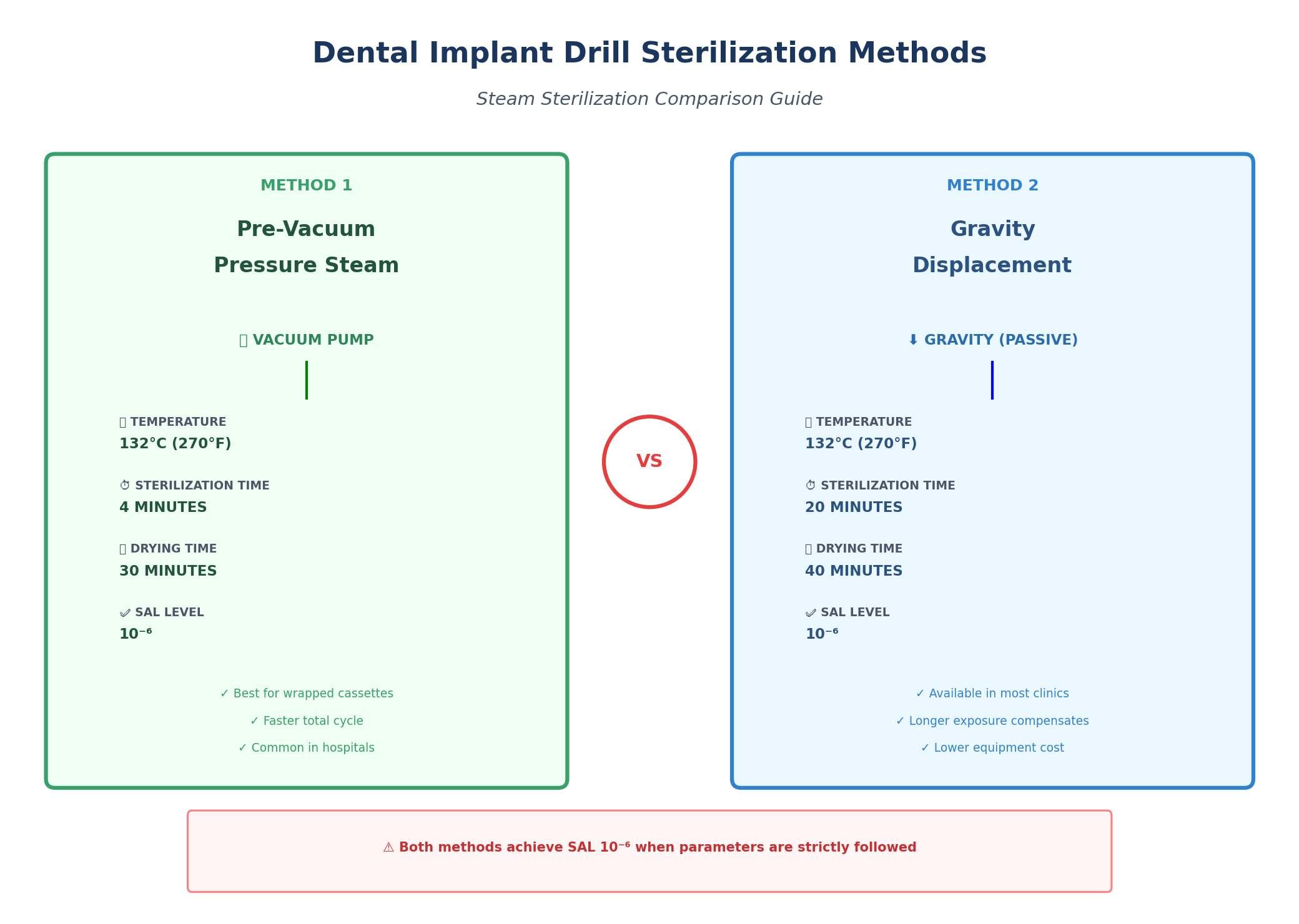
- Sterilization: Any embedded sensor, battery, or microchip must survive repeated autoclave cycles at 134°C. Most electronic components are not designed for this environment. One workaround is a disposable drill with built‑in electronics, but that raises cost and waste concerns.
- Size constraints: Implant Drills, especiallypilot drills and final drills, are small. Adding sensors without compromising cutting geometry, runout, or chip evacuation is difficult.
- Cost and regulatory clearance: A smart drill would be classified at a higher regulatory level than a passive drill. Clinical studies would be required to demonstrate that adaptive speed control actually reduces thermal injury or improves osseointegration. This is a long and expensive process.
- Reliability: A false sensor reading that stops the drill too early or too late could be dangerous. The system must fail safe, which adds complexity and validation burden.
- Wireless communication: If data is transmitted from a smart drill to an external controller, electromagnetic interference and signal dropout in a clinical environment must be addressed.
Current Status and Realistic Outlook
At present, smart Implant Drills with real‑time bone density sensing are mainly found in research prototypes, university laboratories, and patent filings. Some dental handpiece manufacturers have introduced “smart” features such as torque control and automatic reverse, but these are based on motor current, not direct bone density sensing. A few experimental systems have demonstrated adaptive drilling in animal bone or synthetic models, showing reduced temperature and improved hole quality. However, none has become a standard clinical tool.
The most likely near‑term path is incremental. First, implant motors may incorporate more sophisticated torque and acoustic analysis to give clinicians better real‑time feedback, without altering the drill itself. Next, guided surgery platforms may integrate density maps to recommend speed profiles before drilling. Fully autonomous adaptive drills that sense and adjust entirely on their own remain a longer‑term goal, contingent on advances in sterilizable microelectronics and materials.
Conclusion
The concept of a smart dental implant drill that senses bone density and automatically adjusts speed is technically plausible and clinically desirable. It addresses real problems of heat generation, drill wander, and inconsistent osteotomy quality. Multiple sensing routes—force, acoustic, optical, and imaging fusion—are being investigated. However, the barriers of sterilization, miniaturization, cost, and regulatory evidence mean that this technology is still in its early stages.
For Implant Drill manufacturers, the strategic value lies not in promising a finished smart product today, but in tracking these sensing technologies and preparing manufacturing capabilities that can accommodate future sensor integration. As with many dental innovations, the transition will likely be gradual: better feedback first, then semi‑automated speed profiles, and eventually fully closed‑loop adaptive drilling.