Leave Your Message
0%

When it comes to China’s role as a supplier of Implant Analogs, it’s really important to look beyond just the price or how much they produce. Don’t jump to conclusions based solely on those factors. For buyers around the world, the real questions are practical: Does the analog actually fit the specific implant system you’re using? Are the dimensions consistent from batch to batch? And can the supplier provide clear details about the materials and reliable inspection reports?

The market as a whole is expanding. According to Grand View Research, the global dental implants market was valued at around USD 4.6 billion in 2023, and they’re predicting a steady growth rate of nearly 10% annually from 2024 to 2030. Keep in mind, that figure covers all dental implants, not just Implant Analogs specifically—so it shows overall demand, but isn’t an exact measure of the analog market. Tiny mismatches at the interface can sometimes mess up how a restoration seats—even if everything looks right at first glance.

When comparing suppliers based in China, you’ll want to look at things like how precise their machining tolerances are, how smooth the surface finish is, whether they can trace the materials used, and if they can provide proper compatibility documentation and sample inspection results. Good communication during product revisions matters too. Sourcing a reliable Implant Analog isn’t just about a shiny catalog; it’s also about consistent quality and dependable lead times, especially if you’re placing repeat orders. A fancy brochure might look good, but it doesn’t guarantee steady production.

In this case, no specific expert quote or detailed source material was included. Instead of guessing or making something up, I’ve based this on the market report, and I’ll suggest that you double-check supplier claims against technical specifications and physical samples—because those extra steps, even though they take time, can save you from costly mismatches down the line.
China Best Implant Analog Supplier for Global Buyers?

What Is a Dental Implant Analog and How Is It Used?

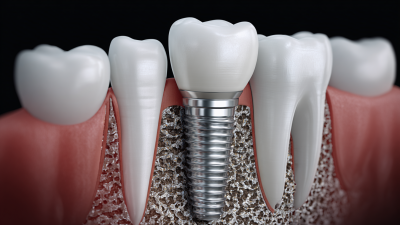
An Implant Analog is a laboratory component that represents a dental implant’s position and connection inside a working model. It is not placed in a patient. Instead, it helps a dental technician shape and check a restoration, such as a crown, before delivery.

That distinction matters.

In a conventional workflow, the analog is secured in a dental cast using information transferred from an impression. The technician can then attach an abutment and assess how the crown fits.

A digital workflow may use a printed model and a matching analog. Small errors matter. If the analog is not fully seated, even a slight shift can affect the restoration’s position or contact with neighboring teeth. Careful handling and verification are essential.

The component should match the implant connection and the laboratory workflow. That sounds simple, but compatibility should never be assumed. Technicians typically check the model, the interface, and the fit before finalizing the restoration.

An analog supports accurate lab work; it does not replace clinical judgment or confirm that a restoration is suitable for a particular patient. Sometimes, the model looks convincing and still needs another check.

Which Types of Implant Analogs Serve Different Clinical and Lab Needs?

Implant Analogs reproduce an implant connection in a working model, helping dental teams check fit before a restoration reaches the patient. Conventional analogs are placed into impressions or stone models. They suit routine crown and bridge work, where the lab needs a stable, physical connection to shape and verify the restoration. Small platform differences matter. A close visual match is not enough.

Digital workflows use model analogs designed to seat in printed models. Their geometry and retention features help keep the analog steady while technicians check emergence profiles, contacts, and screw access. For full-arch cases, multi-unit analogs represent the abutment level rather than the implant connection. This distinction can affect how a framework seats. It is easy to overlook.

Selection depends on the connection type, platform, and workflow—not just the case label. Confirming these details against the component documentation is a sensible quality check. Universal Implant Drivers may help with compatible restorative screws, but they do not make different analog connections interchangeable. A technician should inspect seating and model stability before proceeding. Even then, printed models can introduce small errors, so some cases deserve an extra verification step.

China Best Implant Analog Supplier for Global Buyers? - Which Types of Implant Analogs Serve Different Clinical and Lab Needs?

Implant Analogs reproduce an implant or abutment connection in a dental laboratory model. They are laboratory components, not components placed in the patient's mouth. Selection should be based on the implant system, connection, restorative level, and workflow.

Analog Type Typical Workflow Best-Suited Lab Need Key Compatibility Checks Practical Limitations
Conventional Implant Analog Connected to an implant-level Impression Coping and embedded in a poured dental stone model. Conventional impressions and fabrication of implant-supported crowns, bridges, and other restorations on a physical model. Confirm the implant system, connection geometry, platform size, and whether the impression is at implant level. Accuracy depends on impression technique, coping seating, model work, and correct analog positioning.
Digital model analog Inserted into a prepared opening in a 3D-printed model, usually after the implant position is obtained from a digital scan workflow. Digital design and production workflows that require a physical model with a defined implant interface. Check the analog's connection, model-opening dimensions, insertion direction, retention features, and compatibility with the model workflow. It must be seated fully and securely; an incorrectly positioned analog can affect restoration fit. A scan body is a separate component used to capture implant position digitally.
Implant-level analog Replicates the implant connection directly in a working model. Cases where the restoration is designed and verified from the implant platform, including many single-unit and multi-unit restorations. Verify connection type and platform. Similar-looking connections may not be interchangeable. Requires the correct system-specific connection; matching only the apparent diameter is not sufficient.
Abutment-level analog Represents a selected abutment or restorative interface in the model rather than the implant connection itself. Workflows in which the restoration is fabricated or checked at the abutment level. Confirm the corresponding abutment design, restorative level, and connection details used in the case. Not a substitute for an implant-level analog when the laboratory needs to reproduce the implant platform directly.
Bone-level Implant Analog Used with systems designed for an implant-abutment interface located at bone level. Restorations for bone-level implant systems, including cases requiring access to the system's specific platform connection. Match the exact connection and platform family; confirm whether the case is planned at implant or abutment level. “Bone-level” describes the implant design category and does not, by itself, identify a universally compatible connection.
Tissue-level Implant Analog Replicates a tissue-level implant design with a restorative interface positioned coronally to the implant body. Cases using tissue-level implants where the laboratory needs to reproduce the corresponding restorative interface. Verify the specific restorative platform, connection, and component family required by the case. Do not select by the tissue-level label alone; connection and platform compatibility still need confirmation.
Multi-unit abutment analog Represents a compatible multi-unit abutment interface in a laboratory model. Full-arch and multi-implant restorations designed on multi-unit abutments, including screw-retained prostheses. Confirm the multi-unit abutment system, restorative interface, platform, and any required angled-component details. It represents the abutment interface, not a direct replacement for an Implant Analog; the intended restorative level must be clear.
Metal analog for printed models Installed in a printed model; commonly made from metal for a durable, stable interface. Repeated model handling, prosthesis fit checks, and digital-to-physical laboratory workflows. Check material specification, dimensional consistency, retention design, and fit in the model's analog channel. Material and finish vary by product. Confirm that the selected analog is intended for the model and workflow being used.

How Are Implant Analogs Designed and Manufactured?

An implant analog reproduces the position and connection of an implant in a dental model. Its design begins with accurate reference data: connection shape, platform diameter, seating depth, and the way the component engages with the implant. Even a small mismatch can affect how a restoration fits.

Small details matter.

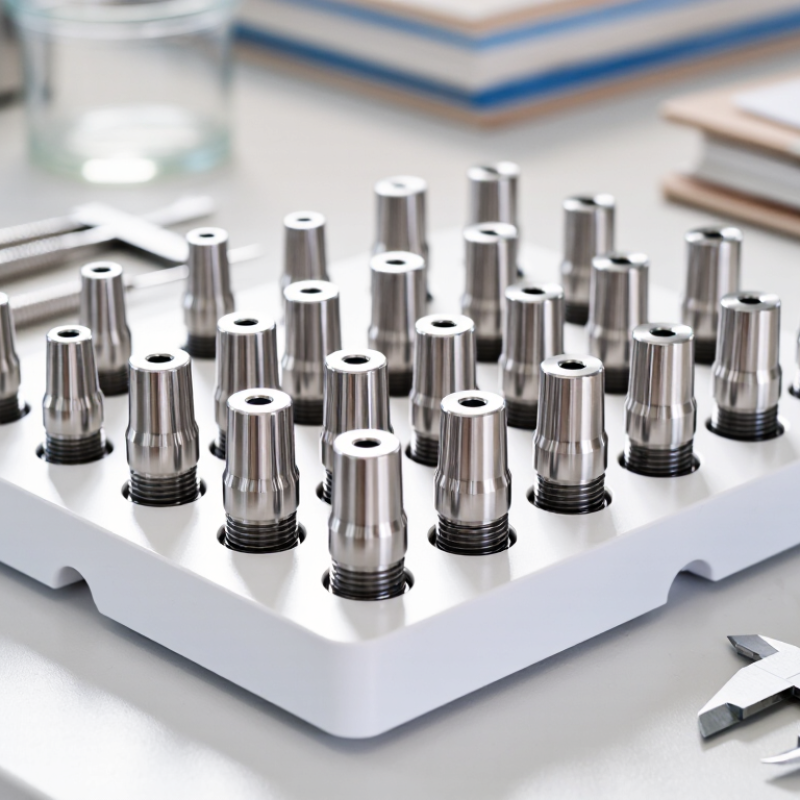
Engineers translate these dimensions into a CAD drawing, then select a suitable material, often a machinable metal chosen for strength and dimensional stability. Production may use CNC turning or milling to form the connection and external profile. Cutting tools create the critical surfaces; operators then remove burrs and check the finish.

The process sounds tidy on paper. Real production still requires adjustment.

Quality checks may include measuring key diameters, inspecting the connection under magnification, and testing fit with compatible components. Manufacturers should document inspection results and keep batch records, so a defect can be traced and investigated. For digital workflows, analog geometry also needs to match the model system and its placement method.

A polished surface alone proves little. Fit and repeatability matter more.

Buyers can ask about material specifications, dimensional inspection, and how compatibility is verified. One limitation deserves attention: published tolerances do not always show how a part performs after repeated handling, so practical fit testing remains useful.

What Quality Standards Should Global Buyers Evaluate?

A reliable implant analog supplier should provide clear dimensional specifications, not just a polished catalogue. Buyers can check platform size, connection geometry, and stated tolerances against the systems they support. Small differences matter. A loose fit or uneven seating can distort a working model and lead to avoidable remakes. Ask for inspection records from actual production lots, and confirm how rejected parts are handled.

Quality documents need context. A quality-management certificate can support confidence, but it does not prove that every analog meets its drawing. Check the certificate’s scope, material identification, lot traceability, and packaging controls. Request samples from more than one batch when order volume justifies it. Inspect machining marks, edges, and seating surfaces under magnification. A Dental Implant Depth Gauge should have its own calibration records; it does not verify an analog’s connection geometry.

Supplier answers may be incomplete, so record unanswered questions before approval. This extra step takes time, but skipping it can make later problems harder to trace.

How Can Buyers Compare Implant Analog Suppliers?

How Can Buyers Compare Implant Analog Suppliers?

A supplier comparison should begin with dimensional accuracy, not catalogue breadth. Implant analogs must reproduce the implant connection and sit securely in the working model. Ask for drawings, stated tolerances, material specifications, and inspection records. Check whether the analog matches your workflow, including impression components and digital model systems. WHO’s 2022 Global Oral Health Status Report estimates that oral diseases affect nearly 3.5 billion people worldwide. That figure is not a forecast for implant demand, but it shows why dependable restorative workflows matter. A large market alone does not prove a supplier’s quality.

Compare sample parts under practical conditions. Inspect the connection under magnification, check for rocking in the model, and record fit across several units. Request lot traceability, nonconformance handling details, and lead-time data. A quality-system certificate can be useful, but verify its scope and supporting controls. Price matters. So does consistency. One overlooked issue: a polished sample may not represent routine production.

Tips: Ask for samples from more than one production lot. Confirm revision control and packaging protection. Keep a simple scorecard for fit, documentation, response time, and delivery reliability. A checklist helps, though it cannot replace hands-on evaluation.

What Factors Shape International Sourcing, Shipping, and Support?

Choosing an implant analog supplier in China involves more than comparing unit prices. Ask for dimensioned drawings, material specifications, and inspection records for the exact product you plan to order. Check that thread dimensions and connection features match your intended workflow. A sample can reveal burrs, inconsistent finishes, or packaging that fails to protect small components. Small details matter. Confirm production lead time, minimum order quantity, and how changes to specifications are documented. “Best” depends on your requirements, not a supplier’s headline claim.

Tips: Request a sample and a written pre-shipment inspection checklist. Ask how each batch is identified, and confirm that export documents match the shipment. An Implant Driver Kit may be useful for checking compatibility, but do not assume it fits every analog.

Shipping and support deserve equal attention. Ask how parts are separated and cushioned; loose metal pieces can rub during transit. Confirm the carrier, tracking process, and who handles questions if a carton is delayed or damaged. Import procedures vary by destination, so verify local documentation requirements with your logistics provider. Delays happen. Before paying, agree on response times, replacement terms, and what evidence is needed for a quality claim. A supplier may answer quickly before an order, yet provide slower support afterward. That possibility is easy to overlook.

FAQS

What is a dental implant analog?

It is a laboratory component that represents an implant connection in a working model. Technicians use it to check a restoration’s position and fit. It is not placed in a patient.

How does an analog help make a crown?

The analog is secured in a cast or printed model. A technician attaches an abutment and checks the crown’s fit, contacts, and position. Small shifts matter.

Are conventional and digital analogs different?

Conventional analogs are used with impressions or stone models. Digital model analogs seat in printed models and may have features that help hold them steady. The workflow matters.

What is a multi-unit analog used for?

It represents the abutment level in some full-arch cases, rather than the implant connection itself. That difference can affect framework fit. Easy to miss.

How can a technician check whether an analog fits correctly?

Confirm the connection, platform, and model details. Check that the analog is fully seated and that the model is stable. A close visual match is not enough.

Can a driver make different analog connections interchangeable?

No. A driver may help with compatible restorative screws, but it does not change an analog’s connection. Compatibility needs its own check.

What should buyers request when sourcing analogs?

Ask for dimensioned drawings, material details, inspection records, and a sample. Check for burrs, uneven finishes, and protective packaging. A sample can reveal more than a product description.

What shipping and support details should be confirmed?

Confirm lead time, tracking, batch identification, and how parts are cushioned. Agree on response times and replacement terms before payment. Delays happen. Import documents may vary by destination, so verify local requirements with a logistics provider.

Conclusion

An Implant Analog is a precision component used in a dental model to reproduce the position and connection of an implant, helping dental professionals create and verify restorations outside the mouth. Different designs may suit particular implant systems, workflows, and laboratory needs, so buyers should consider compatibility, dimensional accuracy, material properties, and ease of use when selecting a type.

Reliable manufacturing depends on careful design, consistent machining, and inspection of critical dimensions and surface finishes. Global buyers can assess suppliers by reviewing quality-control procedures, product documentation, sample consistency, communication, production capacity, and after-sales support. International sourcing decisions should also account for lead times, packaging, shipping arrangements, and the supplier’s ability to provide clear technical assistance. A thorough comparison helps buyers identify a dependable supply partner whose products and service meet the needs of their clinical and laboratory workflows.

Sophia

Sophia

Sophia is a dedicated marketing professional at Gosmile Medical Technology, a high-tech factory based in Dongguan since 2017. With a robust background in the dental and medical device industry, she possesses an in-depth understanding of the company’s innovative products and services. Under her......
Previous 7 Tips for Choosing the Right Sinus Lift Kit?