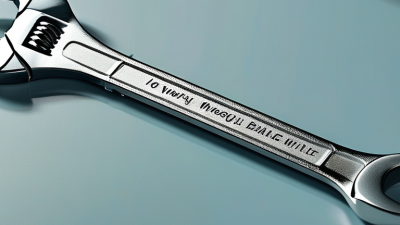
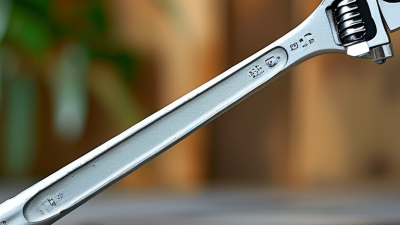
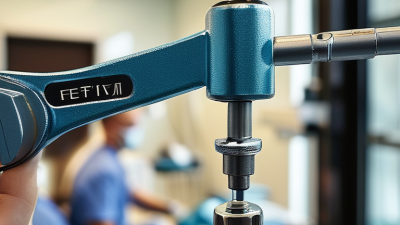
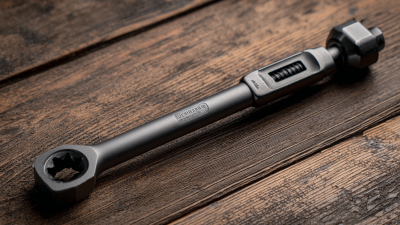
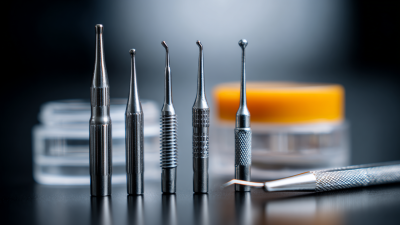
Picking a dependable Dental Implant Wrench supplier isn’t just about hunting for the lowest price or counting how many models they carry. There’s a lot more to it—things like how accurately the torque is calibrated, whether they keep proper records, the quality of the materials used, and if it’s compatible with sterilization protocols. All these details really play into how confident you can be during those critical procedures. And hey, even if a wrench feels super smooth when you hold it, that doesn’t always mean it’ll deliver consistent torque when you really need it under pressure.
Dr. Per-Ingvar Brånemark, who’s pretty much considered the father of modern osseointegration, once said, “The human body has an amazing capacity to accept titanium.” That quote is a good reminder that successful implant treatments depend on a delicate balance—biology, engineering, and careful handling all matter. Sure, a Dental Implant Wrench might seem like a tiny tool, but its performance can actually influence how well the implant components connect in the end.
In this 2026 guide, I’ve looked into some of the top suppliers out there—like Hu-Friedy, Nobel Biocare, Straumann, Dentsply Sirona, ZimVie, and Osstem Implant. We’re digging into stuff like torque ranges, system compatibility, ratchet design, how easy it is to access the head, cleaning processes, and after-sales support. Documentation is a big deal, too. Practical experience? Even more so.
Some brands publish detailed calibration standards—nice to see. Others don’t really give much technical info, which is worth paying attention to.
A good supplier should offer traceable quality control, crystal-clear instructions, rapid customer service, and straightforward support for replacements. If claims seem too broad or suspicious, getting independent verification can save you headaches down the line. That said, this guide isn’t perfect—things like regional product availability, the reliability of distributors, and new product updates can change pretty fast. So, always double-check specifications before buying, and make sure each wrench matches the manufacturer’s approved implant system. Overlooking small details can lead to costly problems in the long run. Honestly, trustworthiness comes from solid evidence and consistency—not just shiny packaging or fancy marketing.

2026 Global Dental Implant Wrench Suppliers: Scope and Definitions
The 2026 global Dental Implant Wrench supplier marketincludes manufacturers, OEM producers, distributors, and specialist surgical instrument companies. This scope covers Manual Torque Wrenches, ratchet wrenches, driver-compatible tools, and calibrated accessories. It excludes ordinary hardware sellers without dental traceability.
A supplier should provide clear material specifications, compatible connection standards, torque ranges, and cleaning instructions. Reliable evaluation also requires quality records, calibration evidence, product identification, and responsive technical support.
From practical purchasing experience, small details matter. A poorly matched driver interface can delay a procedure or damage a component. Geographic scope includes suppliers serving regional and international markets through direct sales, authorized distribution, or validated online channels. However, supplier categories often overlap, which makes comparison imperfect.
Tips:
- Confirm the required torque range before ordering.
- Check whether calibration certificates are current.
- Review sterilization limits and surface durability.
- Ask for compatibility charts, not vague claims.
- Compare warranty terms and replacement access.
- A useful supplier should explain limitations honestly, although many listings still provide incomplete technical data. Buyers should verify each specification with clinical engineers, dental professionals, and documented quality systems before approval.
Implant Wrench Types and Typical Prosthetic Torque Ranges of 10–35 Ncm
Dental Implant Torque Wrench selection matters when prosthetic screws require controlled tightening. Common types include beam-style, spring-loaded, and preset ratchet wrenches. Digital models can display applied force, while manual designs provide a simpler tactile response. Each instrument should match the compatible driver connection and clinical workflow.
Typical prosthetic torque values range from 10 to 35 Ncm. Healing components may require lower settings, while abutment or prosthetic screws often use moderate torque within this range. The exact value depends on the screw design, restorative material, and implant system instructions. Implant insertion torque is different and should not be confused with prosthetic torque.
Small errors matter. A wrench set at 30 Ncm may deliver less after repeated sterilization or poor maintenance. I have seen clinicians rely on “feel,” but hand pressure is inconsistent. Calibration records help. Sterilization can change performance.
Before tightening, inspect the driver tip and screw head for debris. Seat the driver fully, keep the wrench aligned, and apply force slowly until release. Do not extend the handle with another tool. That shortcut can overload the screw or damage the connection. A calibrated Dental Implant Torque Wrench supports repeatable work, but it cannot replace the manufacturer’s instructions or a final clinical check.
Supplier Qualification Under ISO 13485, ISO 14971, and ISO 10993
2026 Top Dental Implant Wrench Suppliers Worldwide
Selecting a dental implant wrench supplier requires more than comparing prices or surface finish. ISO 13485 should support a controlled quality system, including documented production, inspection, training, and traceability. Ask for the supplier’s current certificate and verify its scope. A certificate covering unrelated products may not prove adequate control.
ISO 14971 evidence should show how the supplier identifies and reduces risks. Review risks linked to torque accuracy, mechanical failure, corrosion, cleaning, and incorrect use. Practical audits should include calibration records, batch inspection reports, and complaint handling. ISO 10993 documentation is also important when the wrench contacts tissue or other clinical surfaces. Check the material specification, coating details, and biological evaluation rationale. Do not accept a generic test report without confirming the exact material and intended use.
Tips: Request one production sample. Measure torque performance independently. Inspect markings under magnification. Review sterilization instructions and packaging integrity. Keep these records with supplier approval documents.
A polished certificate is not enough. In real evaluations, missing revision control can reveal weak processes. I have also seen accurate samples fail after repeated cleaning cycles. That detail deserves attention. Qualification should include follow-up reviews, not only a single audit. Requirements may vary by market, product configuration, and clinical application, so technical and regulatory teams should reassess evidence before purchase.
Torque Accuracy Testing Based on ISO 6789 and ±10% Performance Benchmarks
2026 Top Dental Implant Wrench Suppliers Worldwide
Torque accuracy should guide every supplier comparison in 2026. A reliable Torque Dental Implant Torque Wrench requires more than polished packaging. Buyers should request ISO 6789 test records, calibration dates, measurement uncertainty, and traceable reference equipment. These details show whether a supplier controls production or simply repeats specifications.
Testing should cover several points across the wrench’s working range. A calibrated torque transducer can compare the selected setting with the delivered torque. For example, a 35 N·cm setting should be checked under controlled loading, stable alignment, and consistent operator technique. The ±10% performance benchmark offers a practical screening limit. Results outside that range deserve investigation. ISO 6789 procedures provide a stronger technical framework, but compliance claims should be supported by clear reports.
Small habits matter. Resetting the wrench after use can protect its spring mechanism. Storage conditions matter too. A humid cabinet may affect long-term reliability. One missed reset can weaken confidence. I have seen attractive data sheets hide vague test conditions, and that is a warning. Suppliers should explain sample size, retest procedures, and actions taken after failure. Independent calibration evidence is more convincing than a simple “accurate” label. Even careful testing has limits, so dental teams should review records regularly and question unusually perfect results.
Sterilization Readiness for 121–134°C Autoclave Cycles and Reuse
2026 Top Dental Implant Wrench Suppliers Worldwide
Sterilization readiness should guide every dental implant wrench evaluation. A Multi Setting Dental Implant Torque Wrench must tolerate validated steam cycles at 121–134°C. These temperatures represent different autoclave programs, not interchangeable settings. Exposure time, pressure, loading pattern, and drying conditions all affect performance.
Before sterilization, remove visible debris immediately. Clean the wrench according to its instructions, then inspect threads, joints, scale markings, and driver interfaces. Small residues can protect microorganisms from steam contact. Hinged parts may require a fully open position. Some components need disassembly, while others must remain assembled. The supplier’s validated instructions should control this decision.
Use appropriate sterilization packaging and avoid tightly packed instrument trays. After the cycle, confirm the wrench is completely dry. Moisture can encourage corrosion and weaken markings. Repeated heating may also influence torque accuracy, so periodic verification is essential. Record each cycle when reuse limits or maintenance intervals are specified. A damaged, stiff, corroded, or inaccurate wrench should be removed from service.
Not every reusable wrench is validated for every autoclave. That is easy to overlook. A reliable supplier should provide clear cycle parameters, cleaning steps, material details, and reuse guidance. Clinical teams should also review local infection-control procedures. In practice, documentation may be less complete than expected, so unresolved questions deserve written clarification before purchase.
2026 Top Dental Implant Wrench Suppliers Worldwide — Sterilization Readiness for 121–134°C Autoclave Cycles and Reuse
Reference exposure times commonly used for steam sterilization of reusable dental instruments. Actual cycle selection must follow the device manufacturer’s validated instructions and the sterilizer load requirements.
Reference profiles shown: 121°C gravity displacement for 30 minutes, 132°C dynamic-air-removal for 4 minutes, and 134°C pre-vacuum for 3 minutes. Exposure time does not include heating, drying, or cooling phases.
Worldwide Supplier Comparison by Region, OEM Capacity, and Distribution Reach
2026 Top Dental Implant Wrench Suppliers Worldwide
Worldwide supplier comparison now depends on more than catalog size. Regional production affects lead times, documentation, and service response. European suppliers often emphasize traceability and tight machining tolerances. North American sources may provide strong clinical support and responsive custom programs. Asian manufacturing centers frequently offer broad OEM capacity and scalable batch production. These patterns are useful, but not universal.
In OEM evaluation, review material certificates, dimensional reports, surface finishing, and packaging controls. A Dental Implant Guiding Wrench should match the required connection system and torque range. Ask for sample inspection records before approving larger orders. Some suppliers can adjust handle geometry, markings, and packaging without changing core tooling. However, customization may increase validation time and minimum order quantities. Small details matter.
Distribution reach also changes the real purchase cost. Regional warehouses can shorten delivery, while direct factory shipping may offer better pricing. Check spare-part availability, technical response times, and export documentation. A reliable supplier should explain inspection methods clearly. One weakness in this comparison is changing freight conditions; quoted lead times can become outdated quickly. I would verify current stock, production capacity, and service coverage instead of trusting a static supplier profile.
2026 Evaluation Metrics: Materials, Warranty, MOQ, Lead Time, and Pricing
2026 Top Dental Implant Wrench Suppliers Worldwide
Selecting a dental implant wrench supplier requires more than comparing catalog prices. Materials affect durability, cleaning, and torque stability. Medical-grade stainless steel usually offers strong corrosion resistance and consistent performance. Check surface finishing carefully; rough edges can complicate sterilization and handling. A reliable supplier should provide material certificates, torque test records, and traceable batch numbers.
Warranty, MOQ, and Lead Time Warranty terms deserve close attention. Confirm coverage for calibration drift, manufacturing defects, and replacement parts. Some warranties exclude damage caused by improper sterilization. MOQ also matters, especially for smaller clinics and distributors. A low MOQ reduces storage pressure, but it may increase unit pricing. Lead time should include production, inspection, packaging, and shipping. Written delivery estimates are safer than informal promises.
Tips
Request one sample before placing a large order. Test its fit, torque response, and markings. Compare pricing by landed cost, not unit price alone. Ask whether calibration certificates are included. I still make mistakes when overlooking accessory costs. Packaging, replacement heads, and customs charges can change the final figure. Suppliers that answer technical questions clearly often provide stronger long-term support, though communication quality should be verified through actual order experience.
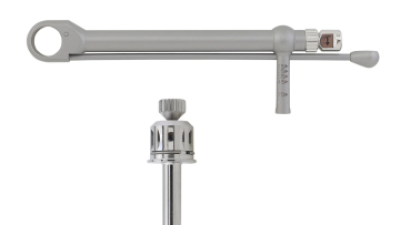
Nobel Biocare Multi-unit Abutment Driver: Manual Torque Wrench Adapter Guide
A manual multi-unit abutment driver is designed to provide a simple and efficient way to tighten abutment screws during restorative procedures. It can be used by hand for controlled placement or connected to a compatible torque wrench when a specific tightening value is required. The driver is suitable for multi-unit abutments, multi-unit abutment plus components, and temporary abutments, making it a practical option for a range of implant-supported workflows.
For accurate torque application, pair the driver with an ergonomic torque wrench featuring clear value markings. Available settings of 15, 25, 35, 45, and 70 Ncm allow users to select the appropriate level according to the clinical instructions for the component being secured. The wrench’s flexible lever provides a comfortable tactile response, helping the operator recognize when the selected torque has been reached. This combination supports consistent screw tightening while maintaining a straightforward, user-friendly technique.
Conclusion
This guide presents a practical 2026 overview of global Dental Implant Wrench suppliers, covering product definitions, wrench types, and typical prosthetic torque applications from 10 to 35 Ncm. It explains how buyers can assess supplier quality through ISO 13485-based manufacturing systems, ISO 14971 risk management, and ISO 10993 material and biological safety considerations. It also highlights torque accuracy testing, with ISO 6789 principles and a commonly applied performance benchmark of ±10%, to support reliable clinical use.
The comparison framework considers suppliers by region, OEM production capability, and distribution reach. It also evaluates materials, autoclave readiness for repeated 121–134°C sterilization cycles, reuse guidance, warranty terms, minimum order quantities, lead times, and pricing. By applying these consistent criteria, dental distributors, clinics, and procurement teams can identify dependable suppliers and select Dental Implant Wrench products that balance safety, durability, technical performance, and overall purchasing value.