Leave Your Message
0%

The global demand for implant dentistry is definitely climbing, but let's face it — sinus augmentation still requires careful handling. According to the World Health Organization’s Global Oral Health Status Report, nearly 3.5 billion people around the world are affected by oral diseases. That’s a huge number that keeps us pushing forward with implant treatments, especially in cases where the back upper jaw doesn’t have enough bone to work with. Meanwhile, Grand View Research predicts that the market for dental implants is going to keep growing steadily through 2030. But let’s be clear — just because the market is expanding doesn’t mean the surgical risks are gone.

For dentists and clinics shopping around globally, the best Sinus Lift Kit isn’t necessarily the biggest or most expensive option out there. Instead, it should help you with things like controlled access, clear visibility, gentle membrane handling, and predictable irrigation. Professor Tiziano Testori, who’s pretty much a leading expert in sinus augmentation, once said, “The sinus is not an obstacle, but an opportunity.” That quote really encourages us to think carefully and plan well, rather than rushing in with aggressive tools. A good kit needs to match your technique, the implant system you’re using, your level of training, and any local regulations.

Details matter a lot in practice. When inspectors check things out, they often look at how well the materials can be traced, the sterilization instructions, the integrity of packaging, and whether the products meet ISO 13485 quality standards. It’s crucial for buyers to also verify things like FDA approval, CE marking under European rules, or other relevant market authorizations. Some suppliers may offer impressive specs but fall short on actual clinical training — and that’s where things can go wrong. For example, a narrow osteotomy, a sharp instrument, or unclear labeling could make the procedure much harder than it needs to be. So, when comparing products, you’ll want to look at handle ergonomics, drill sequences, stopper designs, how easy it is to get replacements, and the level of technical support available. Reports are helpful guides, but they don’t guarantee clinical success. Ultimately, making the right choice should involve a qualified professional’s review, solid evidence, and feedback from experienced implant teams. This 2026 guide is meant to help distributors, clinics, and dental procurement folks worldwide get a handle on these factors.

2026 Best Sinus Lift Kit for Global Dental Buyers

Sinus Lift Kits: Definition, Purpose, and Clinical Applications

A Sinus Lift Kit contains specialized instruments for elevating the Schneiderian membrane and creating space beneath the maxillary sinus floor. Its purpose is to support bone augmentation before, or sometimes with, implant placement in the posterior upper jaw. ADirect Sinus Lift Kit is generally used when limited residual bone requires a lateral window approach. Clinical planning should consider sinus anatomy, membrane condition, residual bone height, and the patient’s medical history.

In practice, kit selection should match the surgical technique, not just the instrument count. Common components may include osteotomes, curettes, elevators, retractors, irrigation accessories, and tools for graft placement. CBCT imaging helps reveal septa, sinus pathology, and wall thickness. However, imaging does not remove surgical uncertainty. Membrane perforation remains a meaningful risk, even with careful handling and suitable instruments. Clinicians should verify material quality, sterilization compatibility, ergonomic control, and local regulatory requirements before purchase.

Tips: Compare the kit with your preferred technique and case types. Check whether instruments allow controlled pressure near the membrane. Review cleaning instructions carefully. Keep backup instruments available. A complete tray is not always a practical tray. Training and supervised experience still matter. When findings are unclear, referral or medical evaluation may be more appropriate than forcing a routine protocol.

Key Components and Instruments in a Modern Sinus Lift Kit

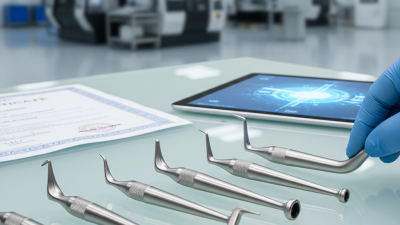
A modern Sinus Lift Kit should support control, visibility, and gentle tissue handling. An Internal Sinus Lift Kit commonly includes osteotomes, depth stoppers, bone condensers, curettes, surgical elevators, and irrigation accessories. Each instrument has a clear role. Osteotomes create controlled elevation. Curettes help protect the Schneiderian membrane. Depth guides reduce accidental over-penetration.

The American Academy of Oral and Maxillofacial Radiology recommends cross-sectional imaging for implant planning, especially when anatomy is complex. A 2023 systematic review in Clinical Implant Dentistry and Related Research reported high implant survival after sinus augmentation, often exceeding 90% during follow-up. However, outcomes varied with residual bone height, membrane condition, and surgical technique. That variation matters. A well-packed tray cannot replace clinical judgment.

Tips: Check working lengths before surgery. Separate blunt and sharp instruments. Confirm irrigation flow before drilling. Keep a membrane repair option available. I have found that small handles can become slippery with irrigation fluid. That detail is easy to overlook. It should be reviewed during staff training. Some kits include more instruments than necessary, which can slow setup. A practical tray should match the planned approach, anatomy, and operator experience. No universal configuration is perfect. Review the kit after each case, and remove instruments that are rarely used or difficult to clean.

How to Compare Sinus Lift Kits for Different Surgical Techniques

Choosing the 2026 best Sinus Lift Kit starts with surgical technique, not the instrument count. For a transcrestal approach, buyers should check osteotome diameter, drill depth control, irrigation, and tactile feedback. These details matter when residual bone height is limited. A lateral-window approach needs a controlled cutting system, membrane protection tools, and reliable access around the sinus wall. The kit should also support different window sizes. One fixed setup rarely fits every anatomy.

Clinical evidence supports careful comparison. A 2023 systematic review in Clinical Oral Implants Research reported implant survival commonly above 95% after lateral-window augmentation. However, study designs and follow-up periods differed significantly. A Cochrane Oral Health review also noted insufficient evidence for declaring one sinus augmentation technique universally superior. That uncertainty matters. Buyers should compare perforation management, visibility, irrigation control, sterilization workflow, and training requirements. Lower cost can become expensive when instruments slow surgery or increase handling errors.

Tips: Match the kit to the surgeon’s routine. Review CBCT cases before purchasing. Confirm compatibility with membrane repair materials and aspiration systems. Ask for documented test results, not only catalog claims. I would also request feedback from surgeons using similar bone heights. One weakness remains: many performance claims come from small clinical series. Independent data are still limited, so a cautious purchasing decision is wiser than choosing the largest kit.

Material Quality, Sterility, and Regulatory Requirements

2026 Best Sinus Lift Kit for Global Dental Buyers

Material quality should be judged beyond appearance. Surgical-grade stainless steel needs consistent hardness, corrosion resistance, and precise working edges. Titanium components may reduce weight, but their surface finish still requires careful inspection. Blunt osteotomes, uneven markings, or loose handles can affect control during delicate sinus procedures. Small defects matter.

In practical procurement reviews, buyers should request material certificates, dimensional inspection reports, and lot-level traceability. Biocompatibility evidence should match the patient-contact duration and intended use. A polished surface alone proves little. I once considered clear depth markings a minor detail; that was a poor assumption. Readability can support safer depth control, especially under limited visibility.

Sterility claims require stronger evidence than a printed symbol. Suppliers should identify the sterilization method, validation standard, packaging integrity tests, and expiration basis. Relevant documentation may include ISO 13485 quality records, ISO 10993 biological evaluation, and ISO 11607 packaging controls. Requirements differ across the United States, European Union, and other markets. Registration status must be checked locally, not assumed from a certificate issued elsewhere. If a kit is supplied non-sterile, instructions must clearly state cleaning, inspection, and validated reprocessing limits. That detail is easy to overlook.

2026 Best Sinus Lift Kit for Global Dental Buyers - Material Quality, Sterility, and Regulatory Requirements

Evaluation Dimension Recommended Specification for Global Buyers Typical Evidence to Request Buyer Verification Point
Primary clinical use Transcrestal or lateral-window sinus-floor elevation procedures, depending on the instrument configuration and clinical technique. Intended-use statement, instructions for use, surgical technique guide, and risk-management documentation. Confirm that the stated use matches the procedure, anatomy, and professional scope allowed in the destination market.
Instrument material Surgical-grade stainless steel suitable for reusable dental instruments; commonly specified grades include corrosion-resistant stainless steels such as 420 or 440-series grades, subject to design and manufacturer validation. Material certificate, grade declaration, corrosion-resistance assessment, and dimensional drawings. Check material grade, surface finish, hardness where relevant, and compatibility with the stated reprocessing method.
Cutting and working tips Smooth, burr-free, atraumatic working ends with controlled geometry; functional edges should retain performance after the validated number of reprocessing cycles. Inspection criteria, dimensional tolerances, surface-finish records, and functional testing reports. Inspect for burrs, cracks, deformation, sharp unintended edges, and loss of working performance after cleaning and sterilization.
Kit configuration A practical set may include osteotomes, depth-marked instruments, curettes or membrane elevators, drills or burs where applicable, irrigation accessories, and a sterilization tray. Component list, product drawings, catalog numbers, and packing configuration. Confirm every component is included, individually identifiable, and covered by the same instructions for use where applicable.
Depth and size markings Permanent, legible depth markings in millimetres; handle and shaft dimensions should support the intended access route and surgical workflow. Dimensional drawings, marking durability testing, and measurement accuracy records. Check readability after repeated cleaning, sterilization, handling, and exposure to commonly used dental chemicals.
Sterile or non-sterile supply Reusable kits are commonly supplied non-sterile and require validated cleaning, inspection, packaging, and sterilization before clinical use. Single-use sterile components must be supplied in an intact validated sterile barrier. Sterilization status, validated reprocessing instructions, sterile-barrier validation where applicable, and lot-release records. Never treat a non-sterile kit as sterile; verify the label, packaging integrity, expiry information, and local facility protocol.
Sterilization method Steam sterilization is generally preferred for compatible reusable stainless-steel instruments. Ethylene oxide or radiation may be used for suitable single-use products when validated by the manufacturer. Cycle parameters, sterilization validation summary, packaging compatibility data, and applicable standards such as ISO 17665, ISO 11135, or ISO 11137. Follow the exact cycle, load configuration, drying requirements, and maximum reuse count stated in the instructions for use.
Cleaning and reprocessing Instructions should define point-of-use treatment, disassembly, manual or automated cleaning, rinsing, drying, inspection, packaging, sterilization, and storage. Validated reprocessing instructions, cleaning efficacy data, and compatibility testing for detergents and equipment. Reject instruments with retained biological soil, corrosion, pitting, loose parts, or damaged markings.
Biocompatibility Patient-contacting materials and residues should be assessed according to the nature and duration of contact, with biological evaluation performed under a risk-based framework. Biological evaluation plan and report, material specifications, residue limits, and applicable ISO 10993 assessment. Confirm that the evaluation covers the finished device, coatings, lubricants, residues, and any patient-contacting accessories.
Manufacturing quality system Controlled design, production, inspection, traceability, complaint handling, and corrective-action processes operated within a medical-device quality system. Current ISO 13485 certificate or equivalent quality-system evidence, audit records, and batch-release procedures. Verify certificate scope, manufacturing site, validity period, and whether outsourced processes are covered.
Risk management Risks such as mucosal or membrane damage, breakage, retained fragments, inadequate cleaning, corrosion, and incorrect use should be assessed and controlled. Risk-management file or summary aligned with ISO 14971, usability documentation, and post-market surveillance procedures. Review warnings, contraindications, training requirements, and controls for foreseeable misuse.
Traceability Each kit and critical component should have a lot, batch, serial, or equivalent identifier linked to manufacturing and release records. Traceability procedure, label artwork, batch records, and certificate of conformity. Ensure identifiers remain readable after reprocessing and can support recall or complaint investigation.
Packaging and transport Packaging should protect tips and surfaces from impact, moisture, contamination, and corrosion during storage and international transport. Packaging validation, transport simulation, storage conditions, and sterile-barrier test results where applicable. Inspect for punctures, crushed trays, moisture, corrosion, broken seals, and missing components at receipt.
Regulatory documentation Documentation should identify device classification, intended purpose, conformity route, labeling, clinical or performance evidence, and applicable national requirements. Declaration of conformity where applicable, technical documentation summary, registration evidence, labeling, and authorized-representative details when required. Regulatory obligations differ by market; confirm requirements with the importer, competent authority, or qualified regulatory professional.
Labeling and instructions Labels should state intended use, contents, material information where relevant, sterility status, lot or batch identification, warnings, storage, and reprocessing instructions. Final label artwork, instructions for use, symbols guide, translations, and version-control records. Confirm language, symbols, units, contraindications, and labeling meet destination-market rules.
Service life and reuse Reusable instruments require a defined inspection and replacement policy; service life should be based on validated reprocessing cycles, wear, and functional performance rather than an assumed period alone. Durability testing, maximum validated cycles, inspection checklist, and replacement criteria. Document usage and remove instruments that show corrosion, deformation, cracking, bluntness, or unreadable markings.
Procurement priority Prioritize validated safety and regulatory evidence, material consistency, reliable traceability, complete documentation, and compatibility with the buyer’s sterilization workflow. Pre-purchase technical questionnaire, sample inspection report, supplier qualification record, and conformity documents. Do not select solely on price or component count; approve only after clinical, quality, sterilization, and regulatory review.
Global purchasing note: Regulatory classification, registration, labeling, sterilization, and importer obligations vary by jurisdiction. The buyer should verify current requirements for the destination market before placing an order or distributing the kit.

Selecting Sinus Lift Kits for Global Dental Markets

2026 Best Sinus Lift Kit for Global Dental Buyers

Selecting a Kit Sinus Lift for global markets requires more than comparing prices. Clinical purpose, operator training, and local requirements should guide the decision. A dependable kit should include clearly identified osteotomes, depth markings, irrigation compatibility, and secure storage. Instrument balance also matters when working near delicate sinus membranes.

Different markets may require distinct labeling, sterilization instructions, documentation, and import approvals. Buyers should verify material specifications, traceability records, and service support before ordering. A specification sheet can look complete, yet one missing adapter may delay treatment. Fit matters. So does consistency.

Tips: Request sample packaging and inspect every component. Confirm compatibility with your surgical motor and irrigation system. Check whether instructions are available in the required local language. Review cleaning cycles with the clinical team, not only the purchasing department. Do not assume one configuration suits every dentist or anatomy. A lower price may become expensive after replacement parts, training, or shipping delays. Reflect carefully on actual case volume; an advanced kit may remain unused in a low-volume clinic. Product selection should remain evidence-informed, transparent, and adaptable to each country’s approved clinical framework.

2026 Trends Shaping Sinus Lift Kit Design and Procurement

Sinus Lift Kit procurement is becoming more evidence-led.

The WHO Global Oral Health Status Report 2022 estimates that oral diseases affect nearly 3.5 billion people worldwide. This wider burden increases demand for predictable implant preparation, especially in aging populations. However, demand alone should not dictate kit selection. Clinicians still need clear anatomy, controlled force, and dependable irrigation.

In 2026, kit design is moving toward lighter instruments, modular components, and better tactile feedback. A Hydraulic Sinus Lift Kit can support controlled membrane elevation when pressure management is clearly defined. Yet, hydraulic systems are not automatically safer. Training, protocol limits, and emergency access remain essential.

The European Commission’s 2024 medical-device coordination updates also reinforce traceability, post-market surveillance, and stronger documentation expectations. Procurement teams should request material certificates, sterilization instructions, and maintenance records before comparing prices.

The OECD Health at a Glance 2023 report shows major differences in healthcare spending and access across countries. Therefore, global buyers increasingly value repairability, reusable workflows, and local technical support.

My concern is simple: some purchasing teams still judge kits by instrument count.

More tools can create more confusion. A practical evaluation should examine grip comfort, visibility, irrigation control, packaging integrity, and staff training time. Small details matter. A scratched handle or unclear depth marking can disrupt an otherwise careful procedure.

FAQS

: What is a sinus lift kit?

: It contains instruments for gently elevating the sinus membrane. This creates space for bone augmentation near the upper back jaw. Small tools matter.

When is a direct sinus lift kit considered?

It may be considered when remaining bone height is limited. A lateral-window technique can provide wider surgical access. Case selection varies.

Which instruments may a sinus lift kit include?

Common items include osteotomes, curettes, elevators, retractors, irrigation tools, and graft-placement instruments. More tools are not always better.

How should clinicians compare kits for different techniques?

Match the kit to the planned approach, anatomy, and surgeon’s routine. Transcrestal procedures need depth control, irrigation, and tactile feedback. Technique comes first.

What does imaging contribute to planning?

CBCT imaging can show sinus walls, septa, pathology, and residual bone height. It improves planning but cannot remove surgical uncertainty. Imaging is not certainty.

What risks should clinicians consider?

Membrane perforation remains a meaningful risk. Controlled pressure, clear visibility, suitable instruments, and supervised experience may help reduce handling errors. Risk never disappears.

Are hydraulic systems automatically safer?

No. They may support controlled membrane elevation when pressure limits are clearly defined. Training and emergency access remain essential. Technology needs discipline.

What should procurement teams check before purchasing?

Review material quality, sterilization compatibility, cleaning instructions, traceability, maintenance records, and local regulatory requirements. Confirm compatibility with irrigation and aspiration systems. Ask for evidence.

Is a larger kit usually the best choice?

Not necessarily. Extra instruments can increase confusion, cleaning time, and handling mistakes. A practical tray should fit common cases and staff skills. I may be wrong.

When should a routine sinus lift protocol be reconsidered?

Unclear anatomy, sinus disease, unusual bone patterns, or limited experience may justify medical evaluation or referral. Forcing a routine plan can create avoidable problems. Pause when findings conflict.

Conclusion

A Sinus Lift Kit is a specialized collection of dental instruments designed to support maxillary sinus augmentation procedures, helping clinicians create adequate bone volume for future implant placement. A modern kit may include osteotomes, curettes, elevators, drills, irrigation components, depth indicators, and other tools selected for lateral-window or crestal approaches. Understanding the purpose and clinical application of each instrument can improve procedural efficiency, handling, and surgical consistency.

When comparing kits, global dental buyers should evaluate instrument completeness, ergonomic design, material quality, corrosion resistance, sterilization compatibility, packaging, and traceability. Regulatory documentation and validated sterility processes are also essential for safe procurement across different markets. In 2026, kit design is increasingly influenced by minimally invasive techniques, improved tactile control, digital treatment planning, customizable configurations, and streamlined inventory management. The best selection should balance clinical requirements, workflow compatibility, durability, compliance, and long-term value.

Lily

Lily

Lily is a seasoned marketing professional at Gosmile Medical Technology, a high-tech factory based in Dongguan since 2017. With an acute understanding of the dental and medical device industry, she plays a pivotal role in showcasing the company's commitment to excellence. Gosmile is ISO-certified......
Previous How to Choose the Best Dental Implant Wrench?